Welcome to Le Lavandou and a very happy Christmas.
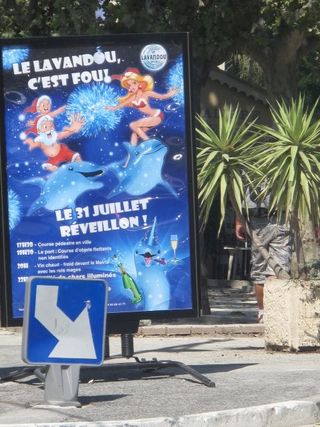
The mayor has decided Christmas should come twice this year, as it did last, so - to a mixture of amusement and bemusement - the seafront will be closed to traffic on Wednesday night (July 31) for a procession of unseasonally seasonal floats, with Papa Noëls spreading bonhomie to all and lots of Mere Noëls wandering about the place too.
With or without such gimmickry, Le Lavandou - currently celebrating 100 years of "independence" from its uppity neighbour, Bormes-les-Mimosas - has become increasingly popular among British visitors.
This growth is largely explained by the three weekly Ryanair flights (Sunday, Wednesday, Friday) from London Stansted, and two Cityjet flights (Friday and Sunday) from London City, into Toulon-Hyères airport, 20 minutes away by road and generally a delight to use.
And now, it is unremarkable to hear American accents as cruise ships choose to make short stops just off Le Lavandou's shores. I imagine they are more impressed if their giant liners also pop into Saint-Tropez, but pleasantly surprised by the much less brash charms of Le Lavandou.
This story, from today's edition of The National, Abu Dhabi* would have benefited from direct input from the Collectif contre l'Islamophobie en France, which has expressed strong views on the recent violent events in Trappes after a Muslim woman was stopped by police because she was wearing an integral burqa. They didn't respond to my e-mail and no one was answering the phone; getting through to spokesmen (or women) these days is a nightmare. This, nonetheless, was my way of looking at the latest depressing example of community tensions in France ...
A hot summer is the policeman's foe, say law officers patrolling troubled housing estates full of angry young men of immigrant origin.
And as temperatures in France reached record, sustained highs of more than 30°C even in the north and west, the constant tensions between authority and the country's large Muslim population boiled over into three nights of rioting.
In Trappes, a town in Paris's western suburbs where the violence erupted, the immediate issue was the manner in which police carried out an identity check on a young mother of French West Indian background wearing a niqab in defiance of a 2010 law that bans face-covering headgear in public. Scores of young people took to the streets as Ramadan fasting was broken by iftar; cars were set alight, police were bombarded with makeshift projectiles and several arrests were made.
According to one community leader, Othman Nasrou, president of the Trappes Citizens' Association, any number of other grievances might as easily have provided the spark.
"Here, people feel abandoned," he told the daily newspaper Le Figaro. "Promised urban renewal has been purely cosmetic and done nothing to remedy fundamental problems. Unemployment among the young exceeds 40 per cent in some areas and we see forces of law only when things go wrong."
Official accounts of the incident stand entirely at odds with those of the woman, her family and the Collective Against Islamophobia in France (CCIF). Police say they were violently attacked by her partner, who was arrested. The woman, cited by CCIF, insists she was ready to lift her veil to identify herself but was insulted by an officer who also pushed her mother sharply.
Whatever the truth, the events - and the choices people made when deciding which version to believe - once again highlight bitter divisions in French society.
In the same way that many people here feel threatened by what they regard as alien cultures, the offspring of Maghrebin and sub-Saharan African immigrants too often feel no attachment to France, even when it is their country of birth.
"I grew up in a Parisian suburb," says a young black athlete, now living in the south of France. "The biggest and most depressing problem is that these young people don't feel French and see no reason why they should."
The niqab issue offers a case in point. Fewer than 2,000 women are thought to wear face-covering clothes, yet police are under pressure to apply the law, leaving Muslims feeling they have been disproportionately targeted. In its first year of operation, the law led to 661 penalties being issued against 423 women, some for repeated offences.
France has also been shocked by reports that young people from an estate populated in part by Muslim immigrant families near the station at Brétigny-sur-Orge, 26 kilometres south of the centre of Paris, where a train derailed on July 12 killing six people, pelted rescue workers with objects and even stole from victims.
It hardly matters that socialist politicians and community spokesmen have urged caution in public comments on actions they say were committed by a handful of troublemakers at most. Some voters will remember more clearly the words of Christophe Crépin, a police union spokesman cited by Le Figaro: "There were some people losing arms or legs, and others who came to steal their watches or mobile phones."
Nor do many outside the left-wing parties and lobby groups pay great attention to the grievances of Muslims who feel discriminated against and excluded from a society into which they are implored to integrate.
Centre-right politicians are more concerned with the perceived failure of government to combat challenges to authority - and what they see as authority's tendency to downplay inconvenient truths about antisocial behaviour.
The rioting in Trappes and alleged looting at the rail crash scene show that for some, the law of their own communities is superior to that of the republic, Eric Ciotti, a member of parliament for the opposition Union pour un Mouvement Populaire (UMP), told Le Journal du Dimanche.
One radical solution, a return to obligatory military service for school-leavers, abandoned 17 years ago, so far appeals to few politicians beyond the far-right Front National. But a 2012 poll found 62 per cent of the French regretted the end of conscription, and the subject frequently comes up among young professionals genuinely worried by rifts in society.
"It could even be community service rather than military-based," says a physiotherapist from the northern city of Lille. "The key is to make all participants, whatever their backgrounds, feel they are in it together."
An uneasy calm has returned to the streets of Trappes by night, but few doubt that another contentious incident could see trouble flare again, there or in other suburbs, called banlieues, where the tensions have risen with the temperatures.
For the interior minister, Manuel Valls, there is at least a new distraction from the need to appear tough on disturbances and supportive of law enforcement agencies.
Mr Valls, seen as a potential successor to the deeply unpopular François Hollande as socialist president, has condemned a mayor's intemperate attacks on a group of travellers, of assorted ethnic origin, who illegally occupied council-owned land in the western town of Cholet.
Greeted by Nazi salutes by some of those he wished to disperse, Gilles Bourdouleix, who also sits in parliament as a centrist MP, exclaimed, apparently referring to Roma: "Perhaps Hitler didn't kill enough of them."
The ensuing furore leaves Mr Valls caught between calling for a sharp judicial response to the mayor's outburst without appearing to support the unlawful settlements of travellers and Roma. And for once, Muslim immigrants cannot be blamed.
* See all my work for The National, including this, at
http://www.thenational.ae/authors/colin-randall
The idea for this feature for The National* occurred as I marked a milestone at my football site, Salut! Sunderland, which last month chalked up its two millionth page visit. It is a great feeling to have turned a passion into something the world wants to read about. But how often I have wondered whether it might, one day, produce a proper income ...
In another age, sneaking a look at another person's diary, especially a close friend or relative's, was among the great social taboos.
The phenomenal rise of the blog means there is no need to risk causing such offence. The diarists are out in force, displaying their innermost thoughts for the world to see.
This was the companion article to my main piece on next year's milestone anniversaries from two world wars, as published by The National, Abu Dhabi ...
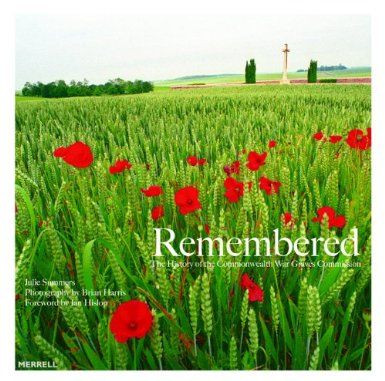
Even on the most conservative estimates, 55 million service personnel and civilians died in the two world wars of the 20th century.
Reflecting on tragedy on such a scale, it might be considered unseemly to link mass suffering of the past to the economic well-being of the present. The French daily newspaper Le Figaro used the phrase "the incredible craze for memorial sites" to sum up the powerful role of this branch of war tourism.
Zemmour, Éric: La France n'a pas dit son dernier mot
Trump, Donald J.: Great Again: How to Fix Our Crippled America
Lowe, Jez: The The Corly Croons
Lowe, Jez: The Dillen Doll
Frank Cottrell Boyce: A Love Letter to Europe: An outpouring of sadness and hope - Mary Beard, Shami Chakrabati, William Dalrymple, Sebastian Faulks, Neil Gaiman, Ruth Jones, J.K. Rowling, Sandi Toksvig and others
Tim Purcell;Mike Gething: Wartime Wanderers: Bolton Wanderers- A Football Team at War (Mainstream Sport) by Tim Purcell (2025-11-22)
Serge Loupien: Johnny Hallyday: La dernière idole
WOLF HALL - TV SERIES
Rob Mason: Sunderland's Greatest Games
Mark Law: High Harm
Abdelghani Merah: Mon frère, ce terroriste
Patrick Garrett: Of Fortunes and War: Clare Hollingworth, first of the female war correspondents
Neil Baldwin: Marvellous - Neil Baldwin: My Story
Will Scott: Black or White, No Grey Areas
Roselyne Bachelot: Bien dans mon âge
Bill Bryson: The Road to Little Dribbling: More Notes From a Small Island (Bryson)
Lawrie McMenemy: Lawrie McMenemy: A Lifetime's Obsession - My Autobiography
Zineb El Rhazoui: 13
Antoine Leiris: Vous n'aurez pas ma haine
Martí Perarnau: Pep Confidential: Inside Pep Guardiola's First Season at Bayern Munich
Dave Seager: Geordie Armstrong: On the Wing
Hanif Qadir: Preventing Extremism and Terrorist Recruitment: A best practice guide
Émile Zola: Germinal (Penguin Classics)
Michel Houellebecq: Submission
Mark Hamilton: The Arsenal ...and Other Poems
Patrick Mauriès: Choupette: The Private Life of a High-Flying Fashion Cat
Roy Keane: The Second Half
Laura Florand: Blame It on Paris
Sarah Turnbull: Almost French: A New Life in Paris


 France News 24/7


Recent Comments